How to Applique
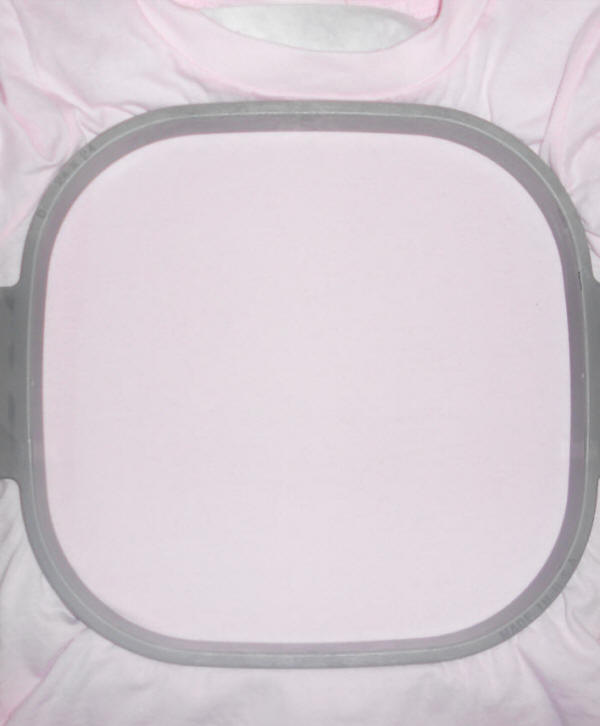
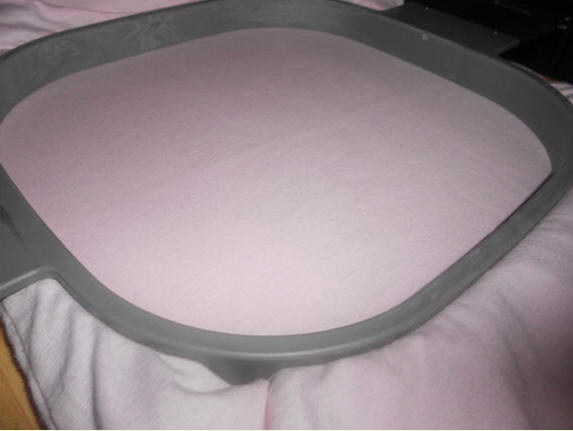
Applique Embroidery Prepare your garment for embroidery by stabilizing and hooping. I am using a T-shirt in this example, so I have stabilized it with a medium weight cut away stabilizer. I do not recommend using anything other than cut away stabilizer on knits. Tear away stabilizer is nice because it can be removed after embroidery, but it will not provide enough support for an applique design. Tip: I like to mark the center of my t-shirts by folding in half lengthwise and then pressing a crease with my iron.
The t-shirt and stabilizer are smooth and secure, but not drum-tight. Hooping too loosely or tightly can cause puckering and design shifting. The stabilizer fills the entire hoop.
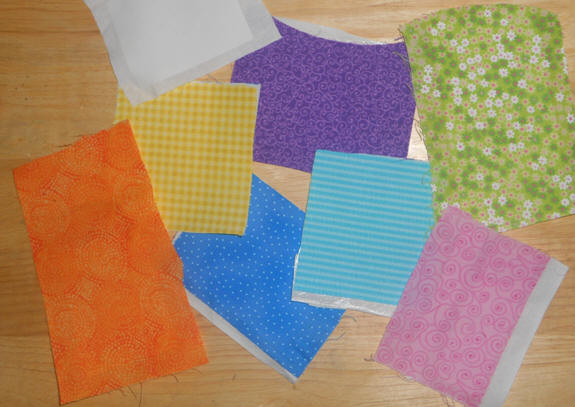
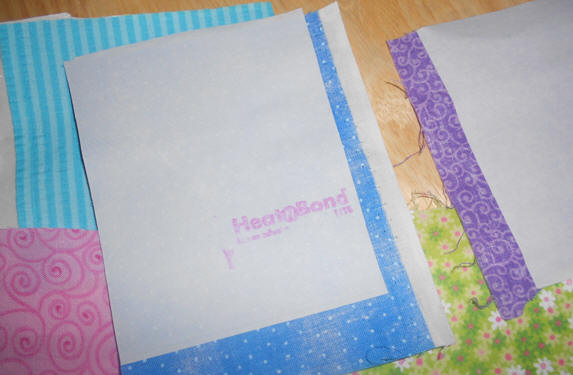
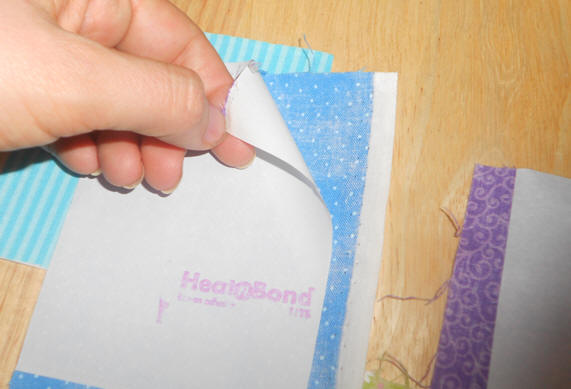
Prepare your fabric by applying Heat-N-Bond Lite (LITE-VERY important to not use regular Heat-N-Bond as it is too thick and the adhesive will gum your needle)
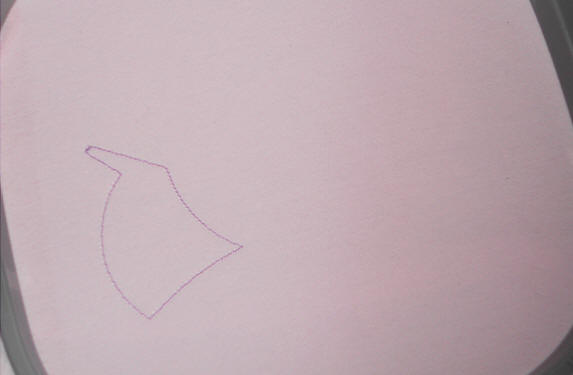
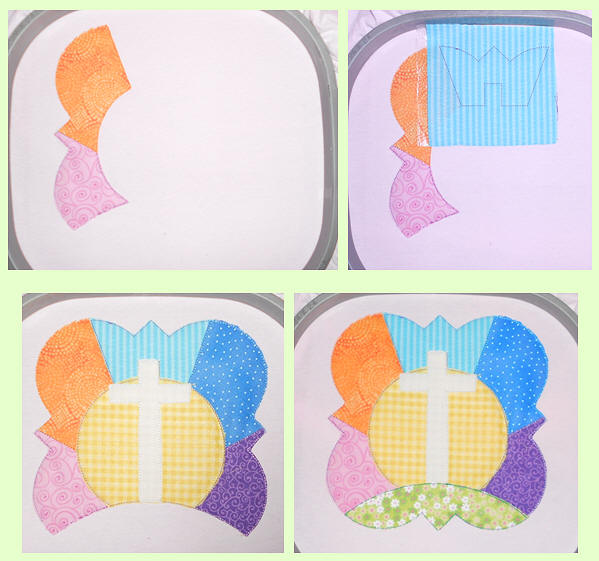
With most applique designs, the first step will show you where to place the fabric. It’s a good idea to have a copy of the design’s color chart to refer to while you are stitching.
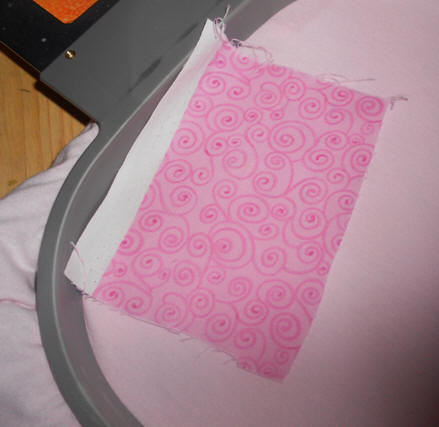
Peel the protective paper off of the fabric that has been backed with Heat-N-Bond LITE and place it on top of the stitches, making sure that you cover the entire area.
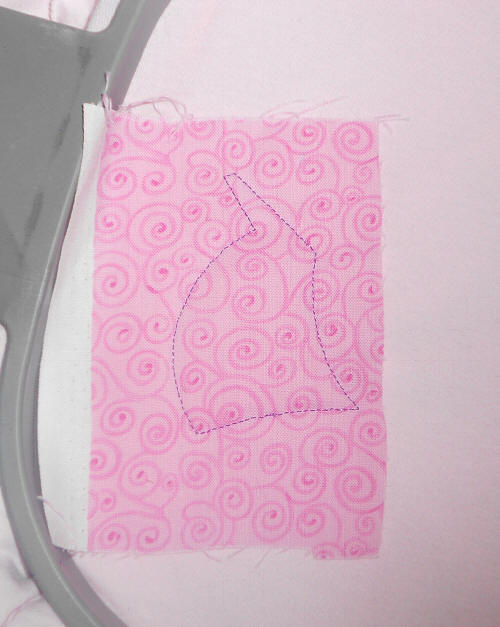
The next step that your machine will stitch will go right over the fabric and will hold the applique fabric in place so you can trim it.
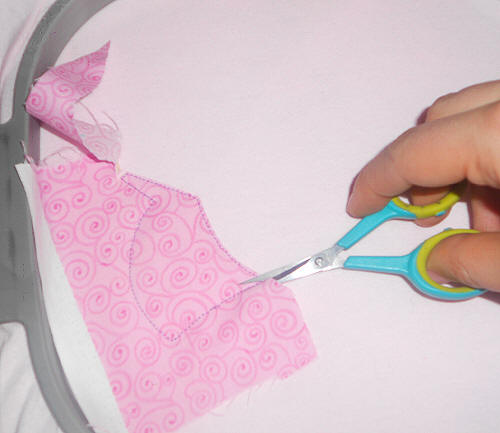
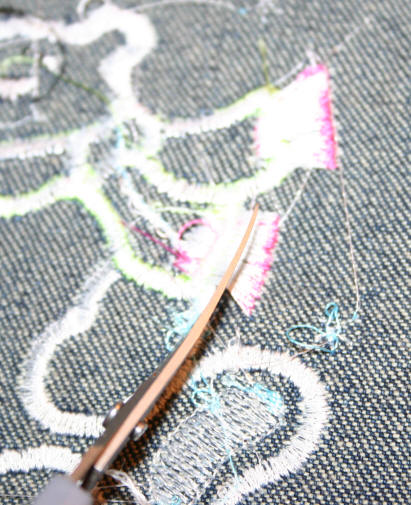
Remove your hoop from your machine but DO NOT remove the T-shirt from the hoop. Trim around the fabric, close to the stitches but not so close that you clip the thread. Small, sharp, curved-top scissors work well for trimming.
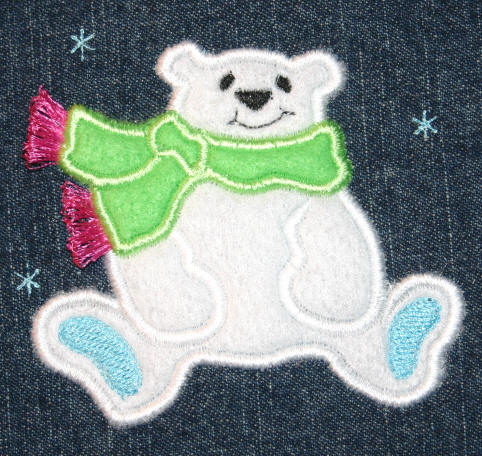
Return the hoop to the machine and repeat the process for all of the applique pieces in the design. This particular design has eight fabric pieces. Some designs only have one. You can refer to the design’s color chart during stitching to guide you.
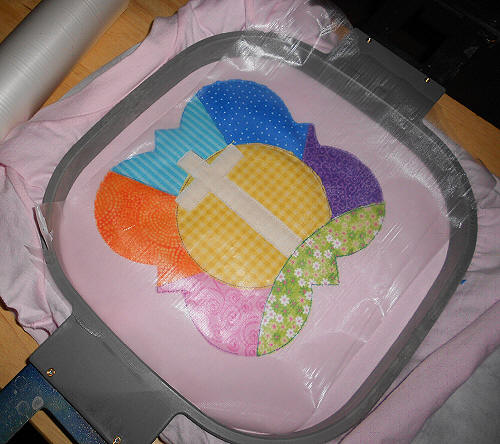
After all of the fabric pieces have been tacked down, you can use a layer of water-soluble stabilizer (WSS) such as Solvy on top of the design. This is helpful when embroidering on ribbed knits, towels, and other textured materials because it provides a flat surface for the embroidery to sit on. Note: Solvy looks like clear plastic kitchen wrap, but it is not the same so I do not recommend using kitchen wrap or other household products on your embroidery projects. Stabilizer is specifically made for embroidery. Plastic wrap can melt under the friction of the metal embroidery needle moving up and down, which can damage to your machine and will also void your manufacturer’s warranty.
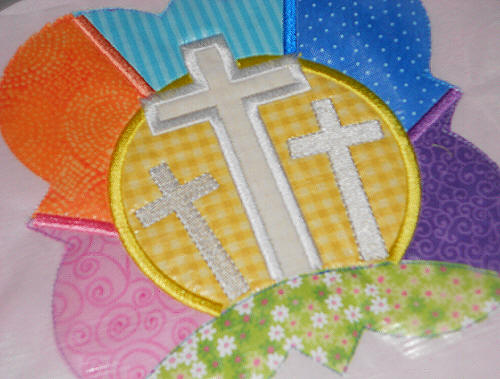
Return the hoop to your machine and resume stitching. The satin stitches and details will stitch after all of your fabric has been tacked down and trimmed. Your machine will tell you when to change thread colors, and you can follow your color chart if you are unsure of what part of the design will stitch.
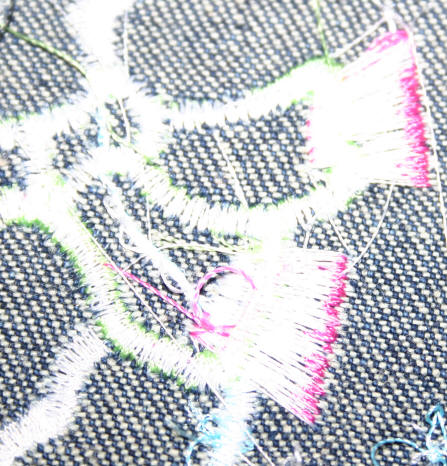
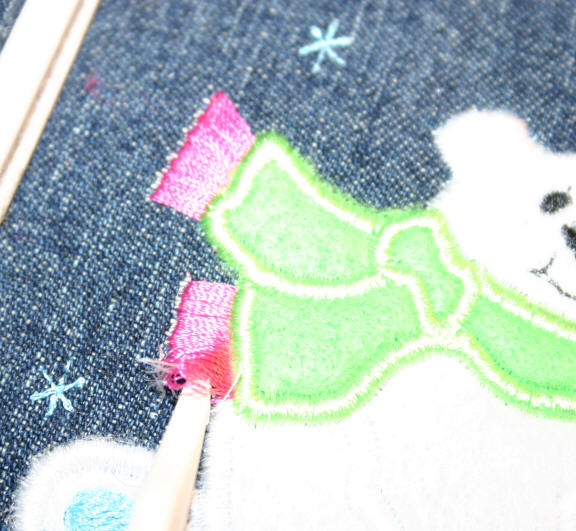
Once the design has finished sewing, you can remove the hoop from the machine and remove the WSS. It should tear away from the design easily, and tweezers or a pencil eraser work well for removing small pieces.
|